What Happens to a Green Roof During a DC Heatwave?
July 21, 2026
Quick Answer: During a DC heatwave, a green roof's surface can stay tens of degrees cooler than a conventional membrane roof next to it, because the plants and growing media are releasing moisture into the air instead of just absorbing solar heat. Sedum, the workhorse plant on most extensive roofs, responds to heat and drought by shifting color from green to red, a normal survival adaptation rather than a sign of dieback. The real warning sign is leaves that go pale, ashen, or wrinkled rather than staying glossy and firm, which means the plants have moved past adaptation and into actual drought stress that needs irrigation. The growing medium itself holds only a limited water reserve, so how long a roof can go without help during an extended heatwave depends heavily on media depth and whether the system has a built-in water-retention layer.
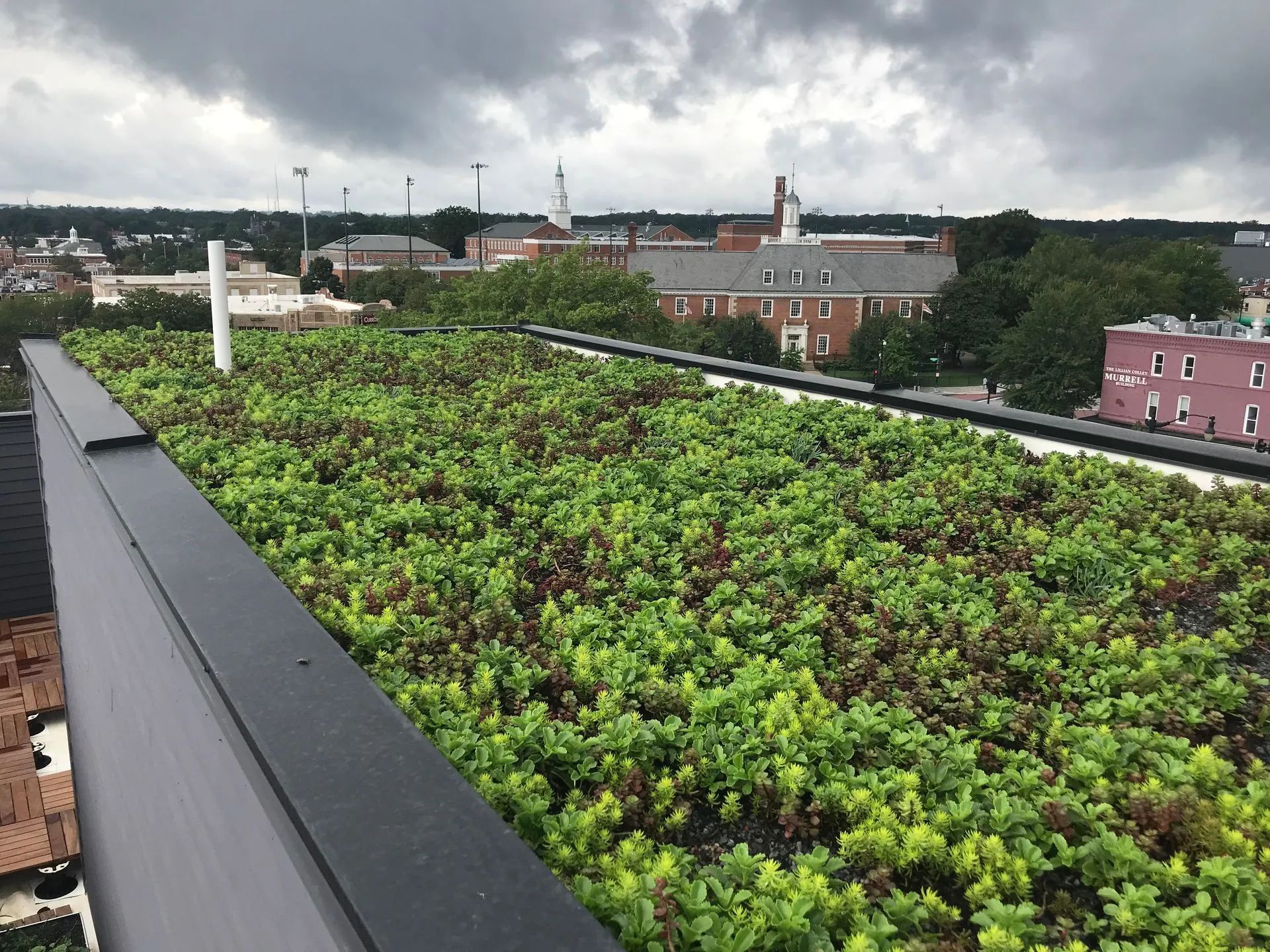
You're standing on a rooftop terrace in July, and the building's green roof looks different than it did in May. Patches that were solid green a few weeks ago have gone reddish-bronze, and from a distance it almost looks like something's dying. Meanwhile, down in the mechanical room, the cooling system doesn't seem to be working nearly as hard as it usually does during a stretch like this. Both of those things are connected, and neither one is necessarily a problem.
A heatwave puts a green roof through a real test, and understanding what's actually happening, at the surface, in the plants, and underneath in the substrate, is the difference between calling for emergency remediation and just watching the system do what it was built to do.
What's Happening at the Surface
The temperature gap is bigger than most people expect. A conventional membrane roof under a July sun can reach well over 150 degrees at the surface. A green roof under those same conditions typically runs far cooler, with EPA data showing green roof surfaces averaging around 56 degrees lower than conventional roofing. That gap comes from evapotranspiration: the plants and growing medium release moisture into the air the same way sweat cools skin, carrying heat away from the roof surface instead of letting it soak into the membrane below.
That cooling effect doesn't stop at the roofline. Nearby air temperatures can drop by up to 20 degrees compared to a conventional roof, and buildings with green roofs have shown cooling-load reductions as high as 70 percent during peak heat. That's why the mechanical room feels different during a heatwave. The roof is doing real work before the HVAC system ever has to.
Why the Plants Change Color
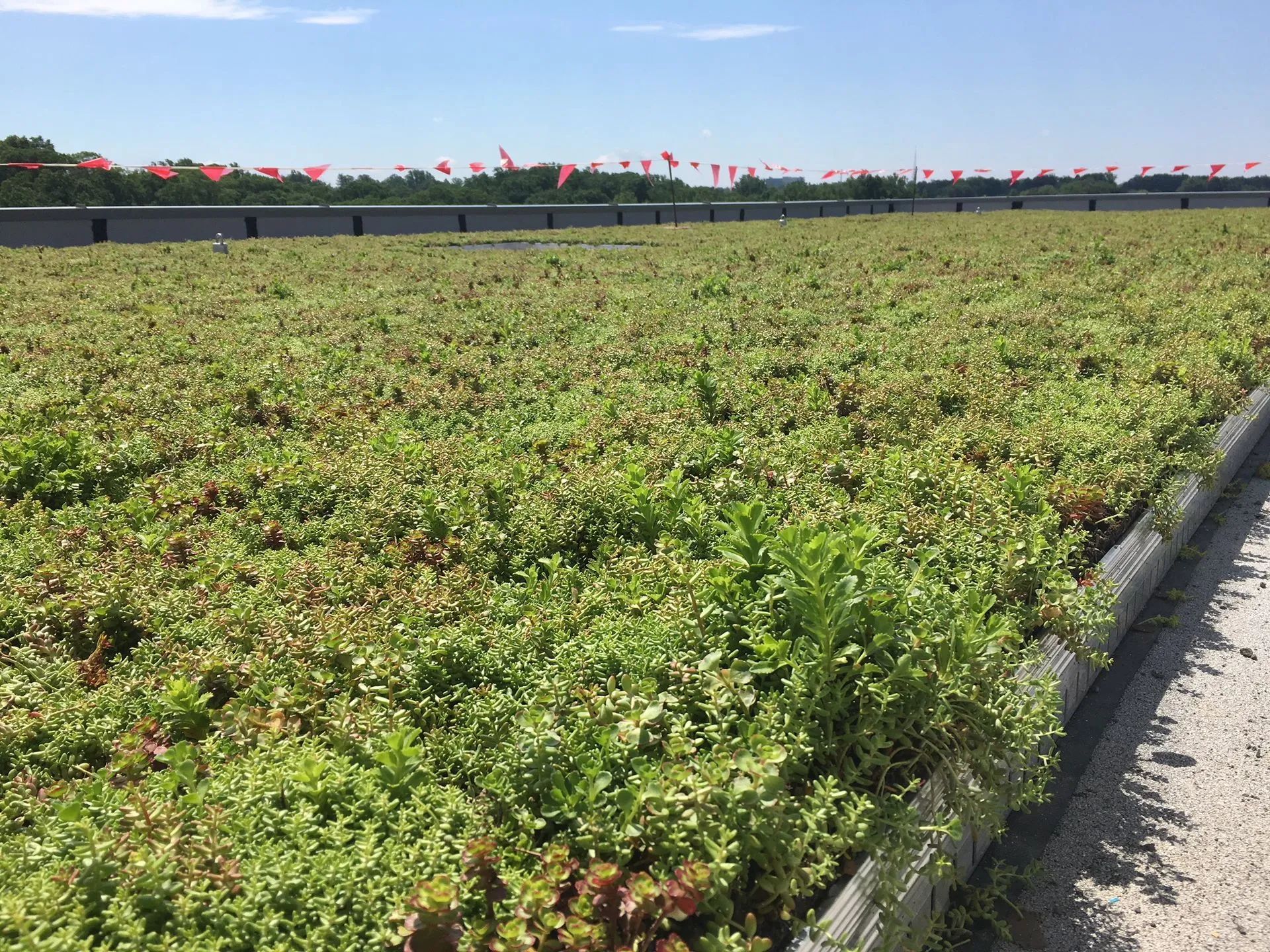
Sedum, the plant most extensive green roofs are built around, belongs to a family of succulents with thick, water-storing leaves and a waxy outer coating built to slow evaporation. When heat and drought set in, sedum doesn't wilt the way a typical garden plant would. It shifts its internal chemistry into a survival mode, and the visible result is a color change from green to a deep red or bronze.
A red, glossy, firm leaf is a plant that's coping, not failing. This is a normal seasonal response to heat and dry conditions, and it's often temporary. As temperatures cool and rain returns, the color typically shifts back toward green on its own, no intervention needed.
When It Crosses Into Real Stress
Color change alone isn't the signal to worry about. Texture is.
Warning: If sedum leaves turn pale, ashen, or take on a wrinkled, deflated look instead of staying glossy and plump, the plants have moved past their normal heat response and are in genuine drought stress. Left unaddressed through an extended heatwave, this stage can lead to real plant loss and bare patches that take a full season to recover.
If you catch a roof at that stage, irrigation timing matters. Water thoroughly enough to reach runoff, and do it in the evening rather than midday, since a large share of water applied under full sun simply evaporates before it reaches the root zone. Because the growing medium holds only a small percentage of organic material and doesn't retain water the way garden soil does, recovery from a stressed state can take repeated watering over a week or more rather than a single soaking.
What's Happening Underneath, in the Media and the Membrane
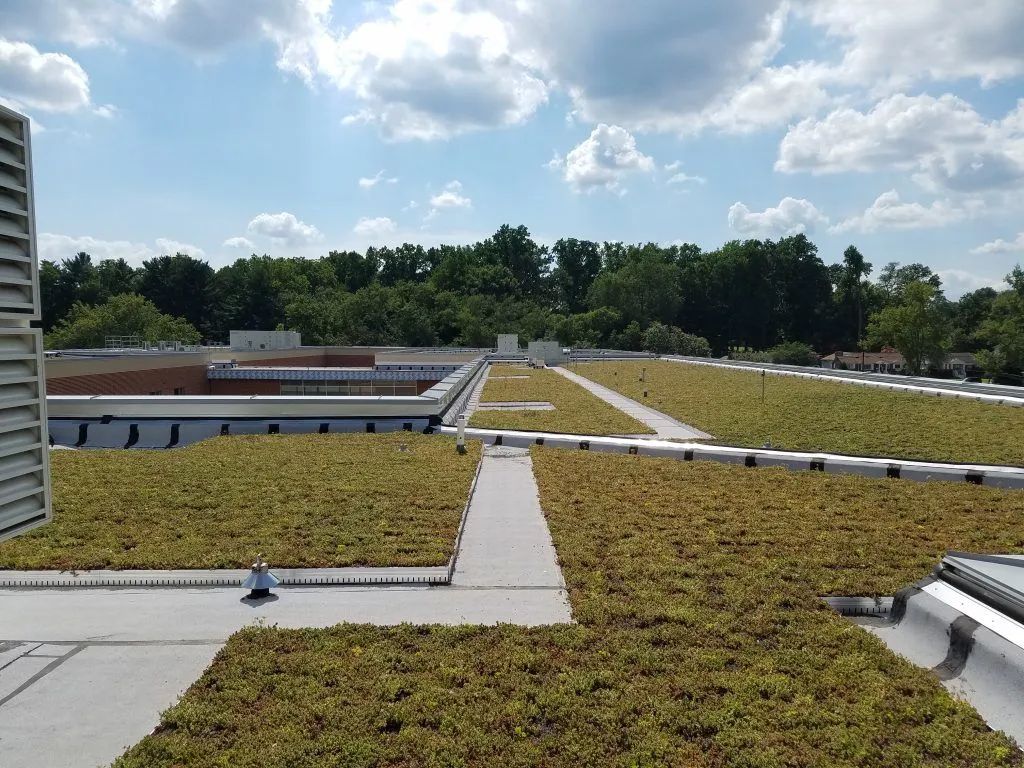
The growing medium isn't just there to hold the plants up. During a heatwave, it's absorbing and buffering heat that would otherwise hit the waterproofing membrane directly, which is part of why green roofs are associated with longer membrane life than exposed conventional roofing. An extensive system with two to four inches of media has less thermal mass and less stored water than an intensive system with a deeper profile, so extensive roofs generally show heat stress sooner and need attention earlier in a prolonged dry stretch.
This is also where the difference between a system with a built-in water-retention layer and one without becomes obvious. A blue-green or retain-style system holds a reservoir of water in a layer below the growing medium, giving plants a buffer to draw from during the kind of extended heat event that would stress a standard drainage-only system. That reserve doesn't eliminate the need for monitoring during a serious heatwave, but it changes how quickly a roof tips from adaptation into real stress.
Tip: If your building experiences several heatwaves a season, ask whether your existing system has any water-retention capacity built in. It's one of the bigger factors in how much hands-on irrigation a roof needs to get through July and August without stress damage.
How Plant and Media Choices Change the Outcome
Not every green roof handles the same heatwave the same way, even in the same city. A roof planted with a narrow mix of one or two sedum varieties tends to show stress uniformly across the whole surface once conditions get bad enough, since every plant is running the same survival strategy at the same time. A roof with a broader, site-specific plant palette, chosen for the building's actual sun exposure, wind, and rooftop microclimate rather than a generic mix, tends to show patchier, less severe stress, because different species reach their stress threshold at different points.
Media depth compounds this effect. A shallow extensive system dries out faster simply because there's less volume to hold moisture in the first place. Builders who spec slightly deeper media in hot, exposed, south-facing sections of a roof are effectively banking extra drought buffer exactly where the sun hits hardest and the heat lingers longest. None of this shows up on a spec sheet as a heatwave feature, but it's often the real difference between a roof that shrugs off a two-week stretch of 90-degree days and one that needs emergency watering by day four.
What a DC Heatwave Actually Looks Like
Washington's hottest stretch typically peaks in mid-to-late July, and the region averages somewhere around 40 days a year at 90 degrees or hotter, with some summers running well past that. That's not an occasional spike. It's a recurring, multi-week stress test that every green roof in the area goes through more than once a season, which is exactly why plant selection, media depth, and irrigation capacity matter as much as the initial design of the system.
Downtown buildings surrounded by pavement and glass face a compounding problem on top of that: the urban heat island effect pushes ambient rooftop conditions even hotter than what a suburban building in the same region experiences on the same day. A green roof in a dense, built-up part of the city is doing double duty, cooling the building underneath it while also fighting a warmer starting-point temperature than a roof surrounded by trees and open ground.
What to Actually Do During an Extended Heatwave
Watch the leaf texture, not just the color, and check the roof after several consecutive days above 90 degrees rather than at the first sign of red foliage. If the plants are glossy and firm, let the system do what it's built to do. If they've gone pale or wrinkled, get irrigation to the roof in the evening, expect the recovery to take more than a single watering, and keep an eye on whether the same areas stress out every summer, since that pattern usually points to thin media, poor drainage, or a system that could benefit from added water-retention capacity.
Frequently Asked Questions
Is it normal for a green roof to turn red or brown during a heatwave?
Red or bronze coloring in sedum is typically a normal drought response, not dieback. Brown, wrinkled, or pale leaf texture is different and usually signals real stress that needs irrigation attention.
How much cooler is a green roof than a regular roof during hot weather?
Surface temperatures on a green roof can run tens of degrees cooler than a conventional membrane roof under the same sun, largely due to evapotranspiration from the plants and growing medium.
Do all green roofs need irrigation during a heatwave?
Not always. Established extensive roofs with healthy sedum can often ride out short heat spells without help. Systems with less media depth, newer plantings, or no water-retention layer are more likely to need supplemental watering during an extended stretch.
How long does it take a stressed green roof to recover after watering?
Because the growing medium holds limited water reserve, recovery from real drought stress usually takes repeated watering over a week or more rather than a single application.
Does a heatwave affect the roof's cooling benefit for the building?
The cooling benefit is strongest precisely during a heatwave, since that's when the temperature gap between a vegetated surface and a conventional roof, and the resulting reduction in cooling load, is at its largest.
Should the same roof area stress out every summer?
If specific zones consistently show heat stress each season, that's usually a signal worth investigating rather than something to keep watering through. Thin media, poor drainage, or a lack of water-retention capacity in that area are common underlying causes.
Reading the Roof Correctly
A green roof going through a DC heatwave isn't a system in crisis. It's a system doing exactly what it's designed to do, buffering heat, protecting the membrane underneath, and cutting the building's cooling load at the moment that load matters most. The skill is in telling normal seasonal adaptation apart from the kind of stress that actually needs a response, and knowing which one you're looking at from the ground. If a roof's response to heat doesn't match what's described here, or the same sections keep struggling every summer, it's worth having someone look at the media depth, drainage, and irrigation setup rather than assuming it will resolve on its own.
A green roof that performs through a DC summer starts with a system designed for the heat it's actually going to face. Riverbend Greenroofs can assess your roof's media depth, plant health, and water-retention capacity, and recommend adjustments if certain zones are stressing out more than they should. With 35 years of experience, LiveRoof and custom-grown plant systems, and a licensed, bonded, and insured team behind a large commercial portfolio, Riverbend Greenroofs builds systems meant to hold up through Mid-Atlantic summers. Reach out to schedule a design assist or performance review before the next heatwave hits.
Share this article