Why Green Roof Maintenance Is Critical in the Mid-Atlantic’s Hot, Humid Summers
August 30, 2026
Quick Answer: A Mid-Atlantic summer doesn't just bring heat, it brings heat stacked on top of dew points that sit in the 60s and 70s for weeks at a stretch, and that combination is harder on a green roof than either factor alone. High humidity speeds up weed germination, keeps dense plant mats damp long enough to invite fungal pressure, and turns a partially clogged drain into standing water the moment a summer thunderstorm rolls through. Extensive sedum roofs generally need a maintenance visit every four to six weeks once the growing season is in full swing, while deeper intensive systems need something closer to a monthly at-grade-garden schedule. Skip one visit in June and you'll probably be fine. Skip two or three in a row through July and August, when plant growth, weed pressure, and storm volume all peak together, and you start seeing bare patches, waterlogged media, and plants that never quite recover before fall.
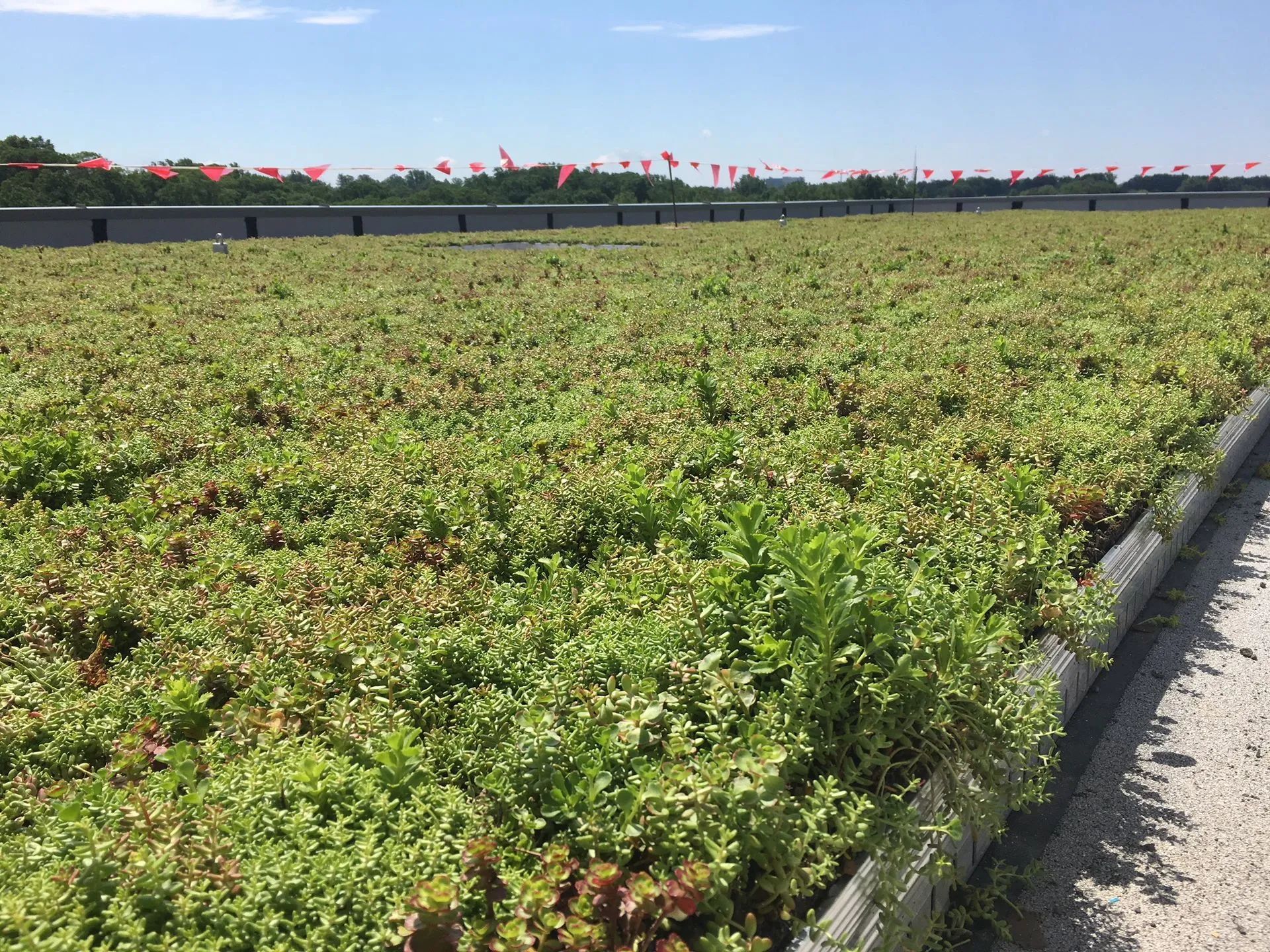
You're on a rooftop terrace outside Gaithersburg in late July, and the air feels thicker than the heat alone accounts for. The green roof underneath your feet looks fine from a distance, but crouch down and you'll notice something the last site visit didn't catch: a thin skin of moisture sitting in the low spots near the drain, even though it hasn't rained since Tuesday. That's not a leak. It's a drainage layer that's slightly behind on doing its job, and in a normal spring it might not matter for weeks. In a Mid-Atlantic August, it matters in days.
That's the part of
green roof maintenance that catches building owners off guard. The plants themselves usually get the attention, and they deserve it, but the system underneath them is working just as hard, and summer in Washington, Maryland, and Northern Virginia asks more of both than any other season on the calendar.
What a Mid-Atlantic Summer Actually Puts a Green Roof Through
Heat alone is a manageable stressor. Sedum and other extensive-roof plants evolved for exactly that kind of punishment, storing water in thick leaves and slowing their own metabolism when the sun is relentless. Humidity is the variable that changes the equation.
The Mid-Atlantic sits in a humid subtropical zone, which means summer heat rarely shows up dry. Dew points routinely climb into the 60s and 70s from June through August, and that moisture doesn't evaporate off a green roof the way it would off a bare membrane. It lingers in the growing medium, in the plant canopy, and in whatever organic debris has collected since spring. A roof that would dry out and reset overnight in a drier climate stays damp instead, and that changes what grows there, what rots there, and how fast small problems turn into bigger ones.
Add in the region's pattern of sudden, heavy convective storms, the kind that dump an inch of rain in twenty minutes and then clear up by dinner, and you get a system that has to handle both prolonged dry heat and flash saturation in the same week. Neither extreme is the real problem. The whiplash between them is.
Irrigation and Drainage: Two Systems That Have to Work Together
Check that irrigation lines are actually delivering water, not just running
A drip line with a partial clog can look fine on the surface while barely wetting the root zone underneath. During peak summer, walk the roof and check moisture at several points, not just near the emitters, since uneven coverage shows up as patchy stress before it shows up anywhere else.
Confirm water is reaching drains, scuppers, and gutters without obstruction
This sounds obvious until you're standing on a roof where a season's worth of seed litter and leaf debris has quietly built a dam six inches from the actual drain opening. Vegetation-free zones around drains exist for exactly this reason, and they need to be re-cleared through the growing season, not just once in spring.
Watch for the gap between rain and relief
A heavy afternoon storm can look like it solved a drought problem, but if the roof's plants are already showing stress, a single downpour rarely reverses it. Recovery from real drought stress usually takes repeated watering over a week or more, since the growing medium holds only a limited water reserve and a chunk of any single rain event runs off before it fully soaks in.
Weeds and Volunteer Seedlings Move Fast in Heat and Humidity
Warm, wet conditions are exactly what weed seeds are built to wait for. A green roof that looked clean at a June visit can carry a noticeable weed population by the time someone checks it again in August, especially in the thin growing medium of an extensive system where competition for space is already tight.
Tree seedlings deserve particular attention. A maple or oak seedling that gets a few weeks head start in humid summer conditions can send roots down toward the waterproofing layer faster than most building owners expect, and pulling it at three inches tall is a five-minute job. Pulling it at three feet tall, with roots already working into a seam, is not. Perennial weeds like clover and spurge spread faster in humid heat too, and catching them small, before they set seed, cuts down on the next season's weed pressure by a lot.
Why the Drainage Layer Clogs More in July and August
The drainage layer beneath the growing medium is designed to move excess water off the roof quickly, and it does that job well when it's clear. Summer works against it in a few specific ways. Plants are shedding spent flowers and dying foliage at their fastest rate of the year. Wind carries in seed fluff, pollen, and organic grit from surrounding trees. Heavy summer storms wash sediment down through the media faster than a slow spring rain would.
None of that debris disappears on its own. It settles into the drainage layer, and a layer that's even partially clogged can't move water the way it's supposed to. That backup doesn't just sit there quietly. Standing water can waterlog the growing medium, suffocate roots that need oxygen as much as moisture, and put sustained hydrostatic pressure on a membrane that was never meant to sit under standing water for days at a time.
Tip: Schedule a drain and scupper check within a day or two of any major summer storm, not just on the regular maintenance calendar. A five-minute clearance after a heavy rain event catches the kind of debris buildup that a monthly visit alone can miss.
Heat Cycling and Why Membrane Checks Matter More in Summer
The waterproofing membrane underneath a green roof is largely shielded from direct sun, which is one of the system's real advantages over a bare roof. But it isn't shielded from everything. Summer in this region means repeated cycles of intense daytime heat followed by cooler, often wet, overnight conditions, and that expansion-and-contraction pattern happens at the seams and flashing points more than anywhere else on the roof.
A membrane under a well-maintained green roof rarely fails outright in a single summer. What tends to happen instead is slower: a seam that was marginal in spring gets stressed by a few dozen heat-cool cycles and a couple of standing-water events, and by the time it shows up as a leak indoors, the underlying cause has been building for months. That's part of why summer maintenance visits should include a look at visible flashing and seam areas around drains, parapets, and roof penetrations, not just a plant health check.
Warning: Standing water that sits in low spots for more than a day or two after a storm is not a minor cosmetic issue. It's a sign the drainage system isn't keeping up, and left through a full summer of repeat storms, it can waterlog roots, kill plants in that zone, and put real pressure on the membrane beneath it. Treat repeat ponding in the same spot as a maintenance priority, not something to note and revisit next season.
Extensive and Intensive Roofs Don't Need the Same Summer Attention
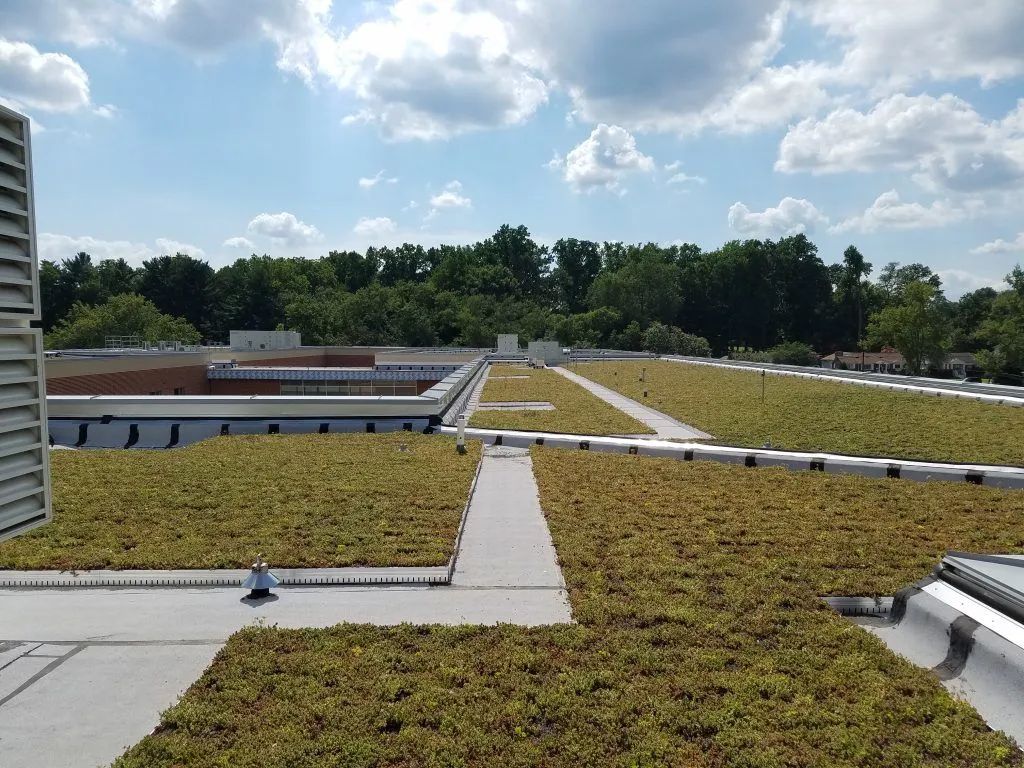
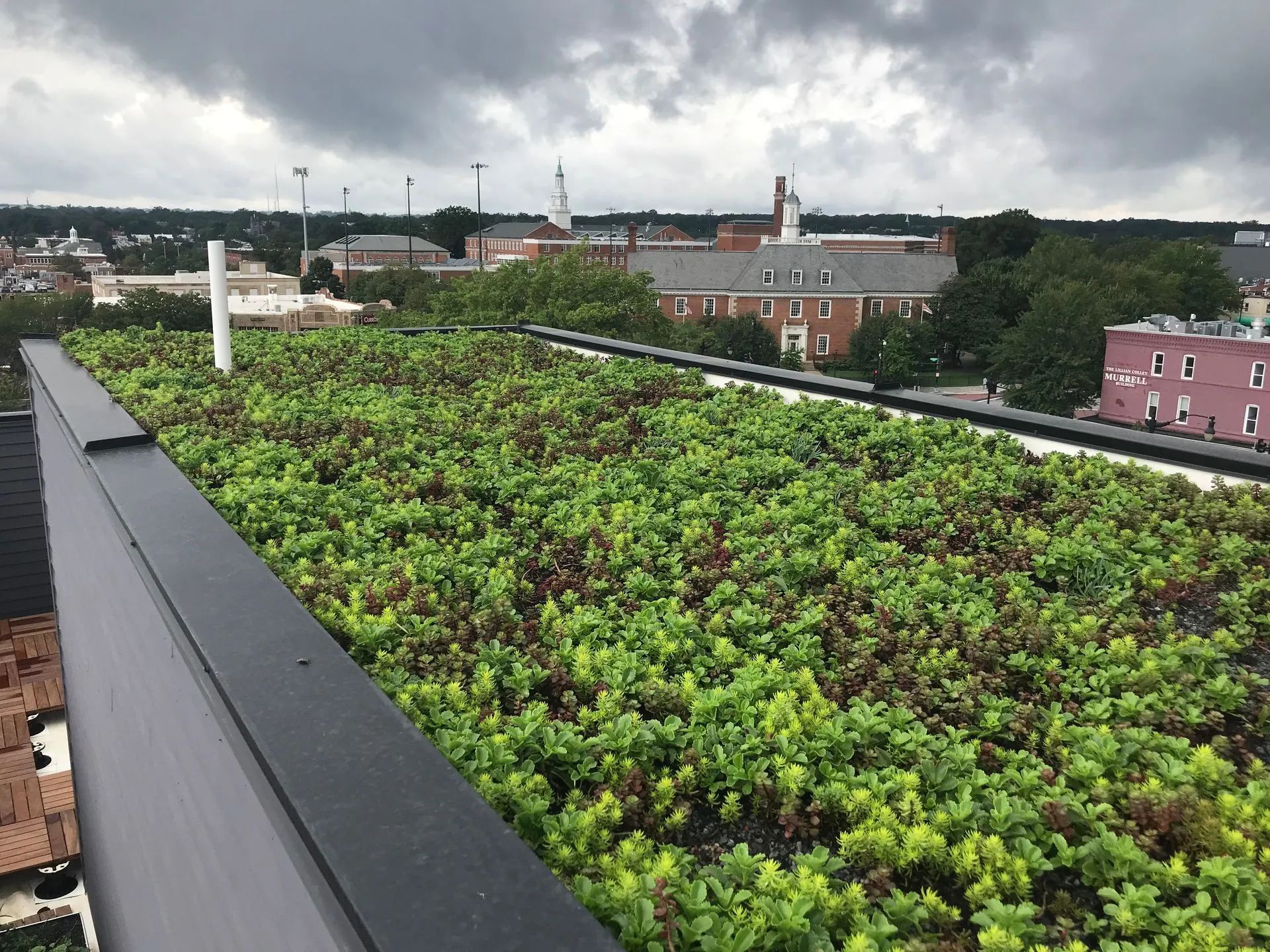
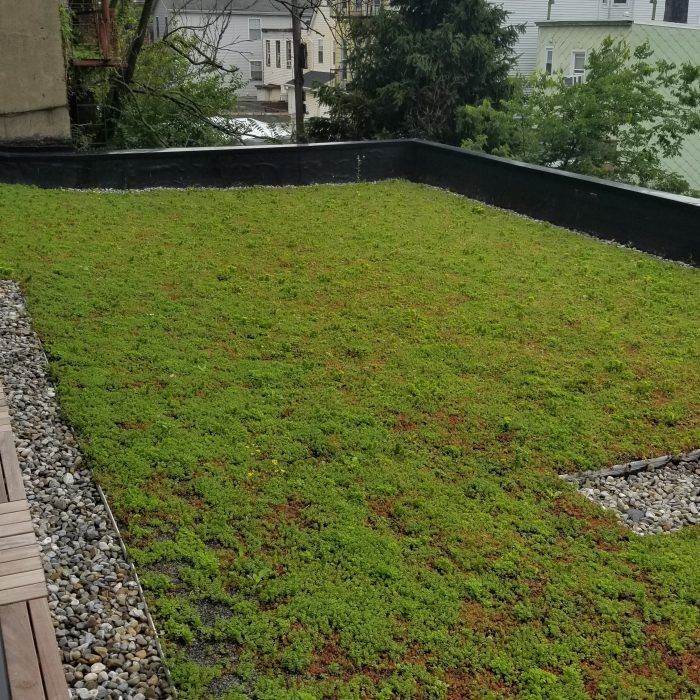
An extensive roof, with two to four inches of growing medium and a sedum-heavy plant palette, is built to be low-maintenance, but low-maintenance isn't the same as no-maintenance in July and August. Its shallow media holds less water in reserve, so it swings between drought stress and saturation faster than a deeper system does, and it needs frequent, quick checks more than it needs long, involved visits.
An intensive roof, with six inches or more of media and a broader plant mix that can include shrubs, small trees, or turf, behaves more like an at-grade garden through the summer. It holds more water, buffers heat better, but also demands the kind of ongoing horticultural attention a garden needs: deadheading, more targeted weeding, occasional fertilizing, and closer monitoring for pest or disease pressure in the denser canopy. A roof with both zones, which is increasingly common on mixed-use and multifamily buildings, needs a maintenance plan that treats each zone on its own terms rather than applying one schedule to the whole roof.
Building a Maintenance Rhythm That Matches the Season
Spring and fall visits can often stretch to six or eight weeks apart without much consequence. Summer doesn't offer that same slack. Extensive systems generally hold up well on a four-to-six-week visit cycle through the growing season, with an added storm-response check whenever the region sees a significant rain event. Intensive systems, and any roof still in its first one to two years of establishment, do better on a closer-to-monthly rhythm, since young root systems and thin canopy coverage are exactly what makes early-summer weed and drought pressure so much more damaging than the same pressure on a mature roof.
The roofs that make it through a Mid-Atlantic summer without incident aren't the ones that got lucky with weather. They're the ones where someone checked the drains after the storm, pulled the tree seedling before it set roots, and caught the irrigation line that had gone quiet in one corner, before any of it became a problem visible from the ground.
Frequently Asked Questions
How often should a green roof be inspected during summer?
Extensive roofs generally need a check every four to six weeks through the growing season, plus an additional walkthrough after any major storm. Intensive roofs and roofs still in their establishment period do better closer to a monthly schedule.
Does high humidity actually hurt a green roof, or just the heat?
Both matter, but humidity changes what heat alone would do. It slows evaporation from the growing medium and plant canopy, which extends the window for weed germination and fungal pressure and keeps a clogged drain wet, and risky, for longer.
Why does a green roof need weeding if it's already covered in plants?
A dense plant mat doesn't stop weed seeds from landing and germinating in exposed soil pockets or thin coverage areas. Warm, humid conditions speed that germination up, and tree seedlings in particular can root toward the waterproofing layer within a single season if left unaddressed.
What happens if a drain stays clogged through a summer storm?
Water backs up instead of draining off the roof, which can waterlog the growing medium, deprive roots of oxygen, and put sustained pressure on the membrane below. Standing water that lasts more than a day or two after rain is worth addressing right away rather than waiting for the next scheduled visit.
Do extensive and intensive green roofs need the same summer maintenance?
No. Extensive roofs have shallow media that dries out and saturates faster, so they need frequent, quick checks. Intensive roofs hold more water and behave more like a garden, needing closer horticultural attention such as deadheading, targeted weeding, and pest monitoring.
Can a building skip maintenance visits during a mild summer?
It's tempting, but weed growth and drainage debris don't slow down just because a particular stretch of weather feels manageable. A missed visit during a mild week can still let a small drainage issue or a young tree seedling go unnoticed until it's a bigger job.
Reading a Green Roof Through the Season, Not Just at a Glance
A green roof that looks fine from the ground can be quietly falling behind underneath, and summer is when that gap between appearance and condition grows fastest. The plants, the drainage layer, and the membrane are all responding to the same heat and humidity at once, just on different timelines, which is exactly why a maintenance visit needs to check all three rather than assuming healthy-looking foliage means everything below it is fine too. A roof that gets checked on a schedule built around what a Mid-Atlantic summer actually does, not a generic quarterly calendar, tends to reach fall in far better shape than one that gets attention only when something already looks wrong.
Riverbend Greenroofs
maintains extensive and intensive systems across Gaithersburg, MD, checking irrigation lines, drainage layers, and membrane-adjacent seams on a schedule built around this region's heat and humidity rather than a generic calendar. With 35
years of experience, LiveRoof and custom-grown plant systems, and a licensed, bonded, and insured team behind a large commercial and institutional portfolio, Riverbend Greenroofs
knows what a Mid-Atlantic summer does to a roof before it becomes visible from the ground. Reach out to schedule a maintenance assessment before the next heat and humidity stretch tests your roof's drainage and plant health.
Share this article