How Green Roofs Reduce Cooling Costs in Maryland and Northern Virginia Buildings
June 30, 2026
Most business owners approach a commercial move the way they approached their last apartment change: pick a date, hire someone, pack the obvious stuff, get it done over a weekend. That mental model costs businesses thousands of dollars and weeks of unplanned downtime every year. The core issue is not effort or willingness. It is that commercial relocation involves coordinated logistics across IT infrastructure, lease timing, vendor access windows, employee communication, and specialized freight that simply do not exist in a residential context.
After handling commercial moves of every scale across Appleton, the Fox Cities, and Fond du Lac, we consistently see the same patterns. Businesses that treat a commercial move as a larger version of a residential move run into problems that were entirely avoidable. The planning window is longer, the moving parts are more interdependent, and the margin for error is much smaller when revenue-generating operations are on the line.
Why a Dark Roof Drives Your Cooling Bills Up
The heat load on most buildings comes from the top down, not the sides. Roofs take the most direct sun of any surface, and a standard dark membrane is built to shed water, not to manage temperature. On a clear afternoon that surface can reach 150 to 180 degrees. The roof deck underneath stores that heat like a battery and keeps releasing it into the top floor long after the sun moves off.
That stored heat is what forces your cooling system to run in long, uninterrupted cycles. The unit is not just cooling the air you feel. It is constantly pulling heat back out of a ceiling that keeps reloading from above. The harder the roof bakes, the longer the equipment runs, and the more energy your building burns to hold a steady indoor temperature.
How a Living Roof Lowers the Heat Before It Reaches You
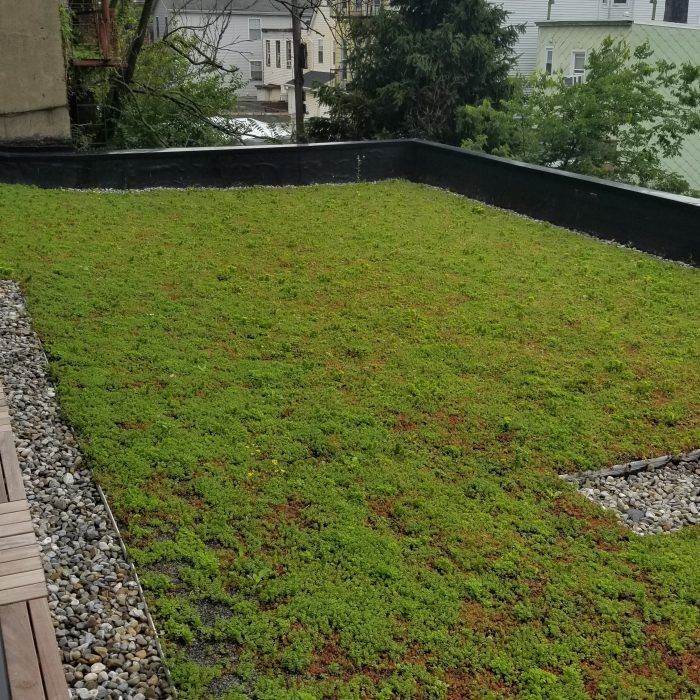
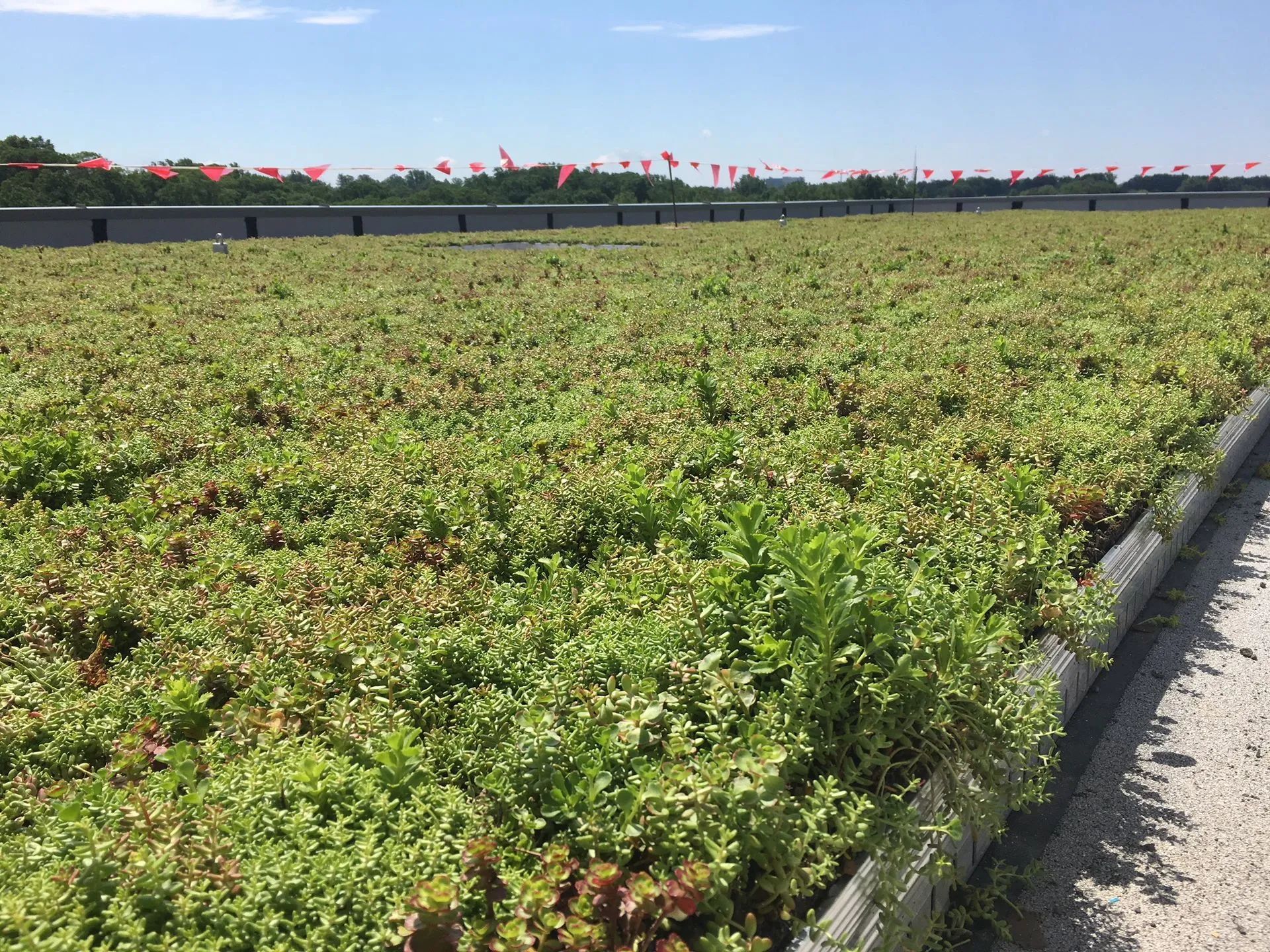
A green roof reduces cooling load through three mechanisms working together, and the strongest is evapotranspiration. As plants release moisture and water evaporates from the growing medium, that process pulls heat out of the air right at the roof surface, the same way sweat cools your skin. A healthy planted roof holds its surface within a few degrees of the surrounding air on the hottest afternoons, while the bare membrane beside it bakes.
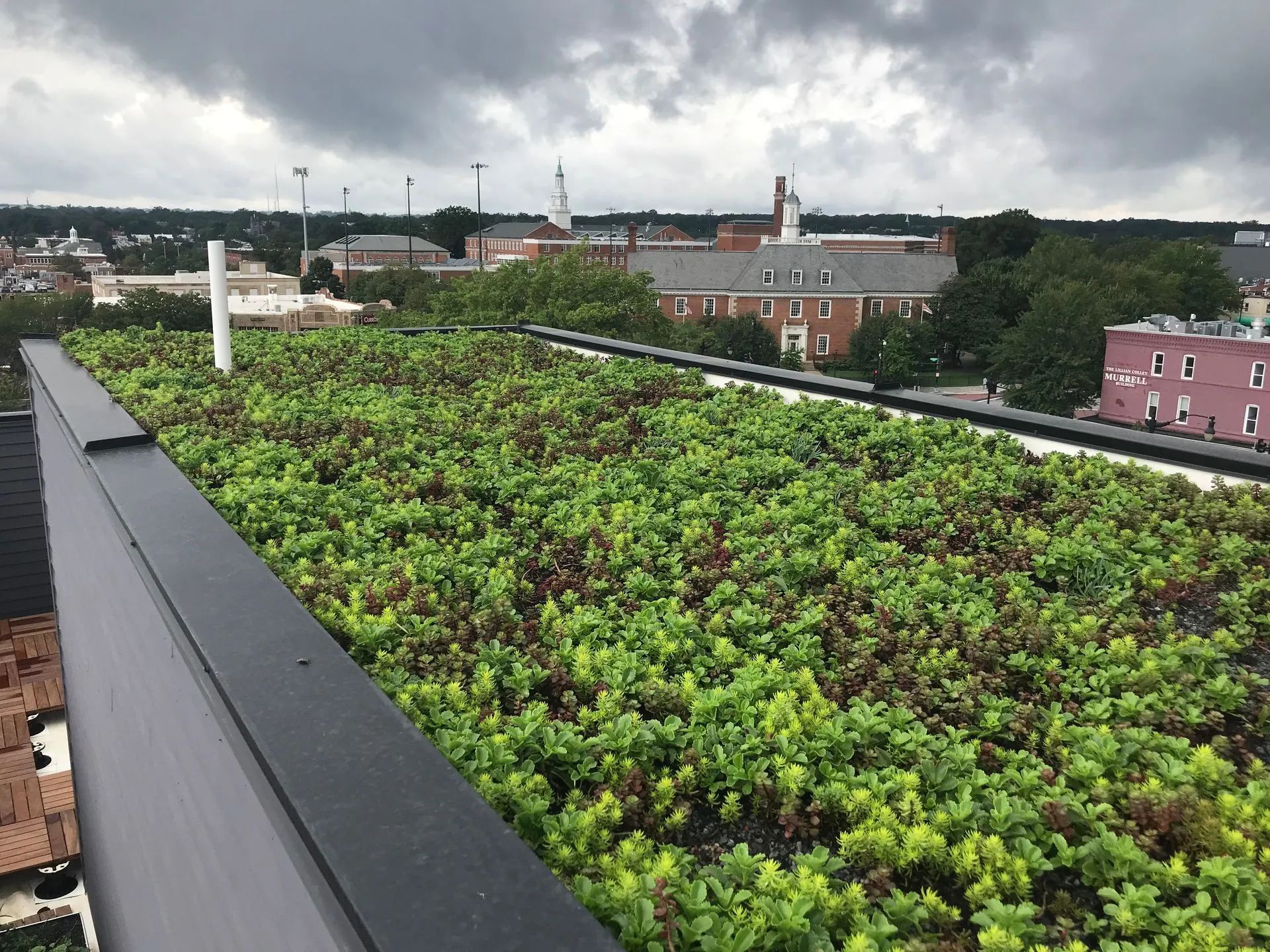
The second mechanism is shading. A continuous layer of plants and soil sits between the sun and your roof deck, so direct sunlight never touches the waterproofing. The deck stops acting like a heat battery.
The third is thermal mass. Several inches of growing medium and saturated material slow the movement of heat into the building to a crawl. Heat that does get through arrives later and weaker, which flattens the afternoon peak when your cooling system would otherwise work hardest. The equipment cycles less, runs shorter, and lasts longer.
What You Notice Inside the Building
The first thing you feel is that the top floor stops being the problem floor. Rooms directly under a planted roof hold temperature far more evenly through the day, because the ceiling above them no longer radiates stored heat down at you every afternoon. Temperature swings between the sunny and shaded sides of the building shrink, and spaces that used to need constant adjustment settle down.
The second thing shows up on the equipment side. When the roof is no longer dumping heat into the structure, the cooling system reaches the set temperature and shuts off instead of grinding through the afternoon. Shorter cycles mean less wear on compressors and fans, quieter operation, and lower energy use across the season. For buildings with rooftop units sitting in full sun, a planted roof also keeps the area around the equipment cooler, so the units pull in less superheated air and run more efficiently.
Why This Matters More Across Maryland and Northern Virginia
Summers across this region are not just hot, they are humid, and that combination is exactly where green roofs pull ahead. Maryland and Northern Virginia run long stretches of heavy, moisture laden air from June into September, which forces cooling systems to work overtime removing both heat and humidity. A planted roof handles the heat side of that equation before it ever enters the building, so your equipment has less to fight during the worst weeks of the year.
The wet springs and frequent summer storms across the Mid Atlantic also feed a green roof naturally. The same rainfall that soaks the area keeps the growing medium moist, which keeps evapotranspiration running and the cooling benefit strong through the hottest months. On the older masonry and flat roofed buildings common throughout the region, where dark low slope roofs are still the norm, the gap between a baking membrane and a cool planted surface is dramatic. We see the steadiest performance on buildings that take full afternoon sun, where the heat load is heaviest to begin with.
What Separates a Roof That Performs From One That Just Looks Green
Cooling performance comes from how the roof is built, not from the plants you see on top. The depth of the growing medium matters most. Too shallow and the layer dries out fast and loses its evaporative cooling on the very days you need it. We build the medium deep enough to hold moisture through a stretch of dry heat while still draining after a storm, the balance that keeps the cooling effect steady.
Plant selection is the second piece. Hardy, drought tolerant species suited to our regional swings between humid summers and cold winters hold ground cover year after year with little fuss. Thin coverage or the wrong species leaves bare patches where the roof deck gets exposed and the heat benefit drops off. Done right, the planting knits into a dense mat that shades every inch of the surface below it.
Keeping the Cooling Benefit Year After Year
A green roof rewards a little seasonal attention. Check the drainage outlets each spring and fall so storms clear properly and the medium does not stay waterlogged. Walk the surface a few times during the growing season to spot thin or bare areas and replant before they spread. After a long dry spell in midsummer, give a young roof supplemental water so the plants keep transpiring and the cooling stays strong when you need it most.
Once a planted roof is established, it asks for far less than most building owners expect. The plants handle the heavy lifting on their own, and a short check each season keeps the surface dense, healthy, and pulling heat away from your building.
Frequently Asked Questions
Do green roofs really lower indoor temperatures?
Yes. By shading the roof deck and releasing moisture into the air, a planted roof keeps its surface near air temperature instead of baking. That stops heat from radiating into your top floor, which steadies indoor temperatures and eases the load on your cooling system.
Will a green roof work on a flat commercial building?
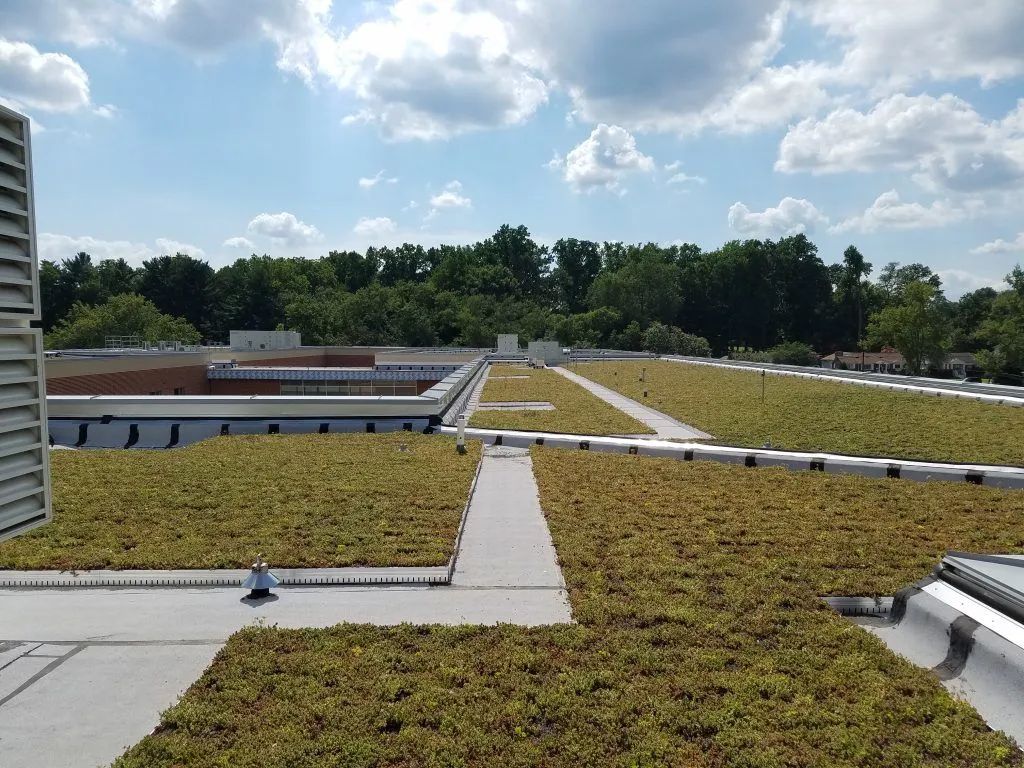
Flat and low slope roofs make ideal candidates, since the growing medium sits evenly and the surface takes direct overhead sun all day. Most older commercial buildings across the region carry this roof style, which is where a planted surface delivers the strongest cooling benefit.
How much maintenance does a green roof need?
Far less than most owners expect. After the planting establishes, the plants sustain themselves through normal rainfall. A seasonal walk to clear drains, spot thin patches, and water young plantings during a long dry spell is usually all the attention a healthy green roof requires.
Can my building structurally support a green roof?
Not every building can without review, so a structural check always comes first. Saturated growing medium adds real weight, and we confirm the deck and supports can carry that load before any work begins. Skipping this step risks overloading a structure never built for it.
Does the humidity in this region hurt green roof performance?
Not at all. The humid summers across Maryland and Northern Virginia keep the growing medium moist, which keeps evaporative cooling running through the hottest stretches. The same wet weather that strains cooling systems actually feeds a planted roof and sustains its benefit all season long.
Experienced Green Roof Builders Serving Your Region
The core principle is simple: keep the roof from baking and you keep the heat from ever reaching your cooling system. In a region this hot and humid, where dark flat roofs soak up sun all summer and release it long after dark, that single change does more for your cooling load than almost anything you can adjust indoors. At Riverbend Greenroofs, we have spent 35
years designing and building custom grown
green roofs
from our home base in Gaithersburg, Maryland, and we know exactly how these systems perform through a Mid Atlantic summer. If your building bakes every July and your cooling system never gets a break, reach out to us about a planted roof built for your structure.
Share this article