How Green Roofs Help Meet DC & Maryland Stormwater Regulations
March 20, 2026
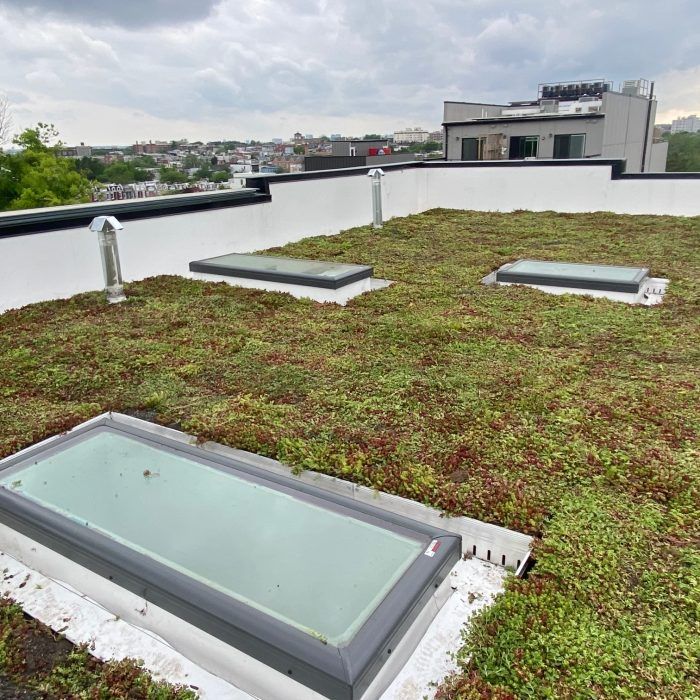
Urban development in Washington, D.C., and Maryland faces growing challenges related to stormwater management. Rapid expansion of impervious surfaces—roads, rooftops, and parking lots—has increased stormwater runoff, causing flooding, erosion, and water pollution in local waterways. Municipal governments have responded by implementing stringent stormwater regulations designed to mitigate these risks, protect natural resources, and ensure sustainable urban growth. Compliance with these regulations is critical for both new construction and retrofitting existing structures. Property owners, developers, and architects are increasingly seeking innovative solutions that address regulatory requirements while also providing environmental and economic benefits.
Green roofs have emerged as a highly effective strategy for stormwater management, combining ecological functionality with architectural appeal. By incorporating vegetation, soil, and specialized drainage layers, green roofs absorb and retain rainwater, reducing the volume and rate of runoff. Beyond meeting regulatory thresholds, they offer additional advantages, including energy efficiency, urban heat island mitigation, and enhanced building aesthetics. In regions like D.C. and Maryland, where stormwater regulations are closely tied to permitting and legal compliance, green roofs are not just an environmental choice—they are a practical, code-compliant solution. Understanding how these systems function, their benefits, and best practices is essential for property owners and developers aiming to meet both regulatory obligations and sustainability goals.
Understanding DC & Maryland Stormwater Regulations
Key Regulatory Frameworks
Both Washington, D.C., and Maryland have robust stormwater management regulations aimed at controlling runoff and improving water quality. In D.C., the Department of Energy & Environment (DOEE) enforces the Stormwater Management Rule, which mandates that new developments and substantial redevelopments manage the first inch of rainfall onsite. Similarly, Maryland’s Stormwater Management Act and county-specific ordinances require developers to reduce impervious surfaces and implement best management practices (BMPs) for stormwater retention.
Compliance with these regulations often involves capturing, detaining, or infiltrating stormwater before it leaves the site. Green roofs qualify as a recognized BMP under these programs because they reduce runoff volumes and attenuate peak flows, helping properties meet both state and municipal standards.
Implications for Permitting
Meeting stormwater requirements is not optional—it directly affects project permitting. In D.C., building permit applications must include a stormwater management plan detailing how runoff will be controlled. Maryland counties, such as Montgomery, Prince George’s, and Anne Arundel, have similar permitting prerequisites. Incorporating green roofs into project plans can simplify approvals, as these systems can demonstrate compliance with volume reduction and runoff rate standards, reducing the need for costly stormwater retention ponds or underground storage tanks.
How Green Roofs Manage Stormwater
Rainwater Retention and Detention
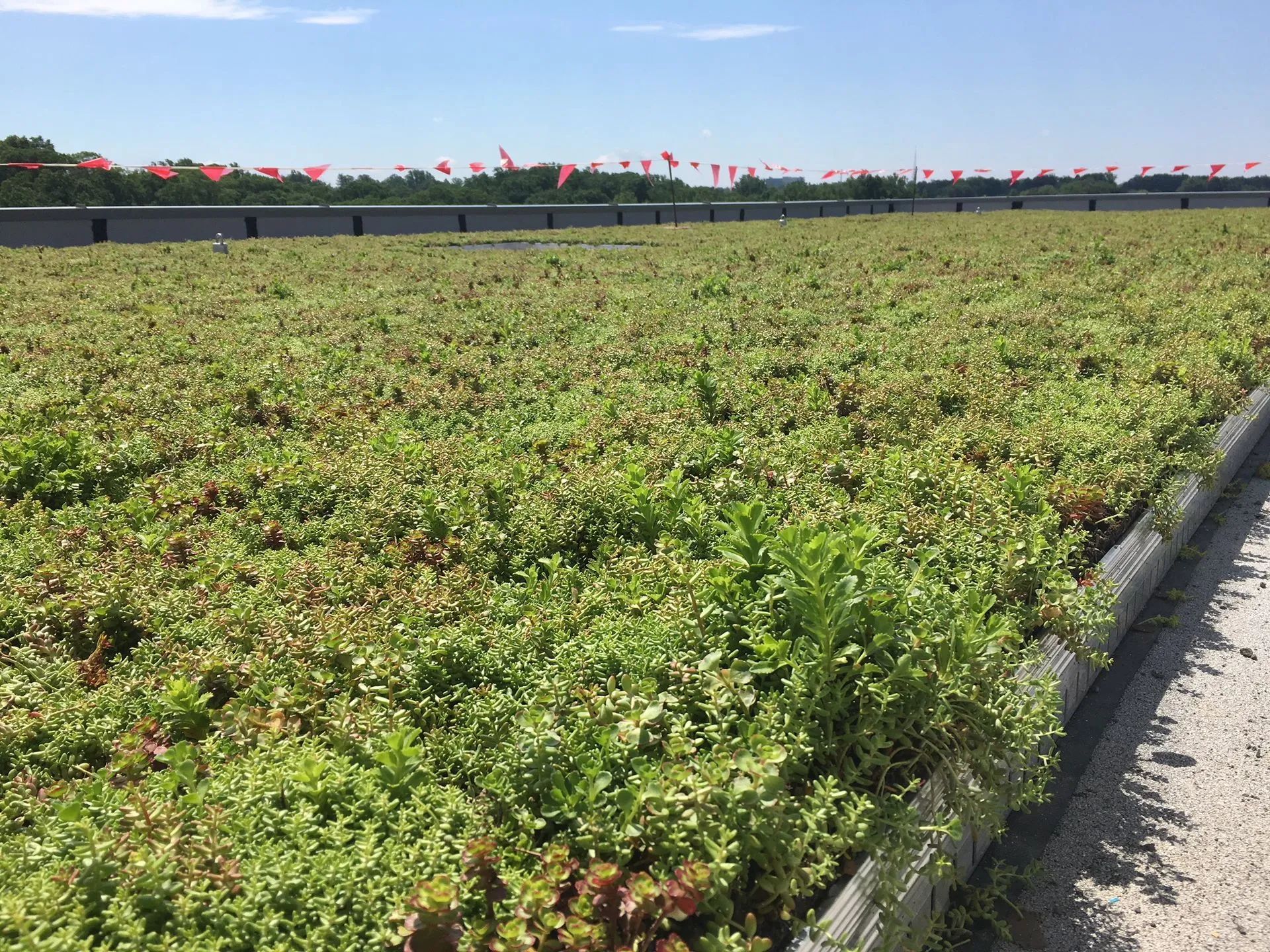
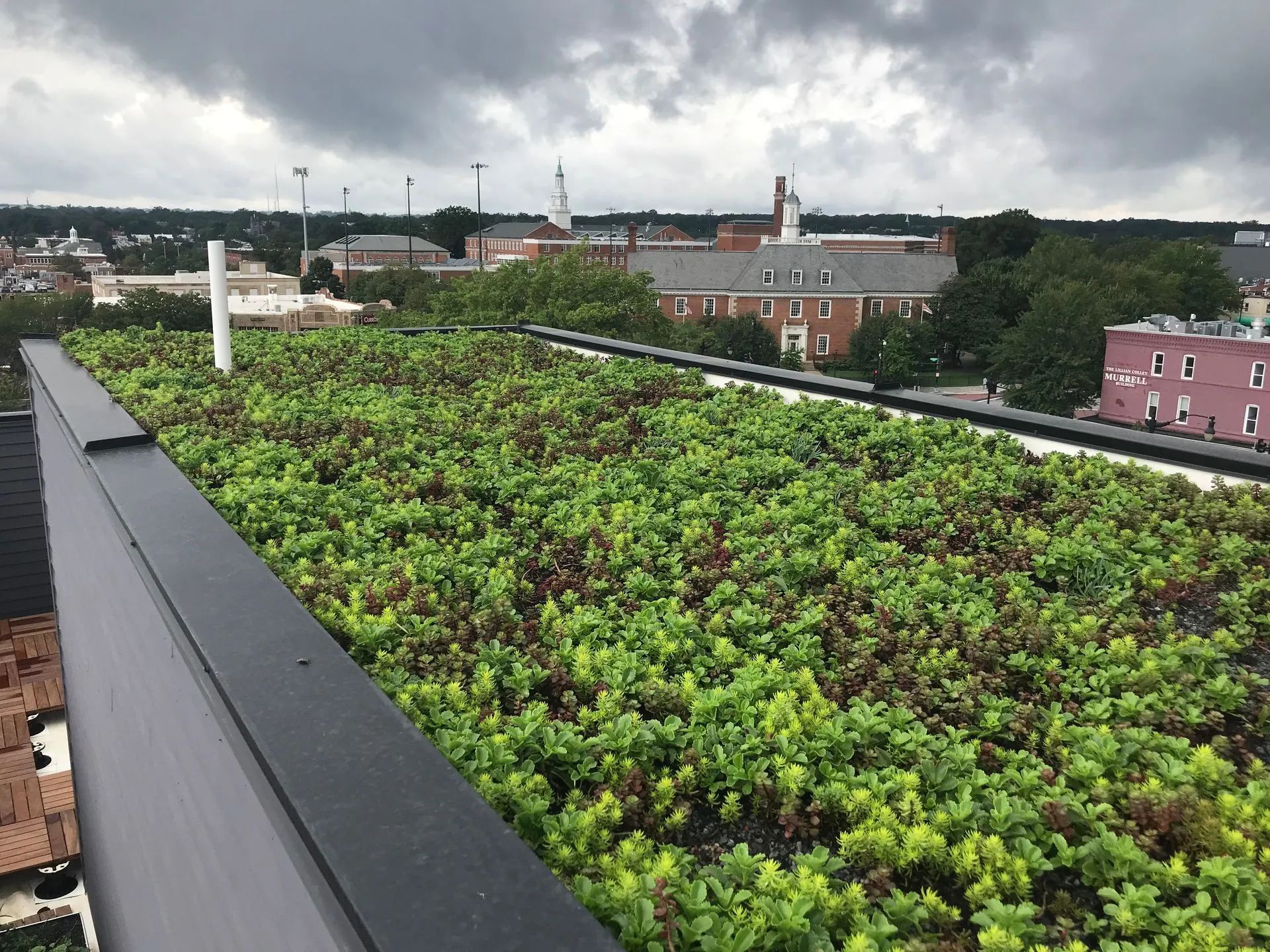
Green roofs function by temporarily storing rainwater in their soil substrate and vegetation layers. The water is either absorbed by plants, evaporates, or slowly drains through a specialized system. This reduces the volume of runoff entering municipal stormwater systems, a key requirement for compliance in both D.C. and Maryland. Extensive green roofs, which have shallow growing media and low-maintenance plants, typically retain 50–60% of rainfall, while intensive systems with deeper soil can retain even higher volumes.
Peak Flow Reduction
Stormwater regulations often focus not only on total volume but also on controlling peak flow rates during heavy rainfall events. Green roofs act as natural buffers, delaying water runoff and smoothing peak discharge rates. By attenuating stormwater flow, green roofs minimize the risk of downstream flooding and erosion, fulfilling regulatory criteria that prioritize both water quality and quantity management.
Improved Water Quality
Runoff from impervious surfaces often carries pollutants, including sediments, heavy metals, and nutrients, into streams and rivers. Green roofs filter and absorb many of these pollutants before they enter the stormwater system. By removing contaminants and trapping sediments, green roofs contribute to compliance with water quality standards set by the Clean Water Act and local stormwater programs, enhancing urban watershed health.
Benefits Beyond Regulatory Compliance
Urban Heat Island Mitigation
D.C. and Maryland experience significant urban heat islands due to dense development and extensive impervious surfaces. Green roofs provide thermal insulation and reduce ambient temperatures through evapotranspiration. Cooler rooftops reduce building energy demand for air conditioning, which indirectly benefits stormwater management by decreasing heat-induced pollutant loads in runoff.
Extended Roof Lifespan
Green roofs protect the underlying roofing membrane from UV radiation and extreme temperature fluctuations, extending roof service life. Longer-lasting roofs reduce material waste and maintenance costs, making green roofs a sustainable investment that complements stormwater compliance efforts.
Aesthetic and Community Value
Beyond functional benefits, green roofs enhance property aesthetics and contribute to community wellbeing. They can serve as rooftop gardens, outdoor amenity spaces, or visual green infrastructure that improves urban livability. Such features are increasingly valued in municipal planning and environmental incentive programs, offering additional incentives for adoption.
Implementation Strategies for Regulatory Compliance
Design Considerations
Effective green roof design is critical for regulatory compliance. Designers must account for soil depth, plant selection, and drainage infrastructure to maximize stormwater retention. Lightweight extensive systems are ideal for retrofits and small-scale projects, whereas intensive systems can support larger vegetation and multi-functional spaces. Proper engineering ensures that the roof retains sufficient water volume while safely directing excess runoff into approved drainage systems.
Integration with Site-Wide Stormwater Plans
Green roofs are most effective when integrated into a comprehensive stormwater management plan. Coupling rooftop systems with rain gardens, permeable pavements, and detention basins can enhance overall site compliance. This integrated approach allows developers to meet regulatory targets efficiently and may reduce reliance on expensive below-grade retention solutions.
Monitoring and Maintenance
Maintaining green roof performance is essential for long-term compliance. Regular inspections ensure drainage layers remain functional, plants are healthy, and runoff is properly controlled. Many municipalities, including D.C., require documentation of stormwater BMP performance, and well-maintained green roofs can demonstrate ongoing regulatory adherence, reducing liability risk for property owners.
Challenges and Solutions in Green Roof Adoption
Structural Limitations
One of the primary challenges in installing green roofs is structural capacity. Existing buildings may require reinforcement to support soil weight, particularly for intensive green roofs. A structural engineer must assess load-bearing capacity during project planning. For lighter systems, extensive green roofs with shallow substrate layers offer a viable alternative without extensive structural modifications.
Cost Considerations
Green roofs involve higher upfront costs compared to conventional roofing. However, when factoring in stormwater fee reductions, energy savings, and roof longevity, the return on investment often justifies the expenditure. Maryland and D.C. sometimes provide incentives, grants, or stormwater fee credits for property owners implementing green infrastructure, making green roofs a financially strategic choice.
Climate and Plant Selection
Selecting appropriate vegetation is crucial for the success of green roofs in the Mid-Atlantic region. Native and drought-tolerant plants are ideal, ensuring survival during dry spells and high-intensity storms. Sedums, grasses, and other hardy species maintain runoff retention and resist seasonal stress, supporting regulatory compliance throughout the year.
Case Studies and Real-World Examples
Municipal and Commercial Applications
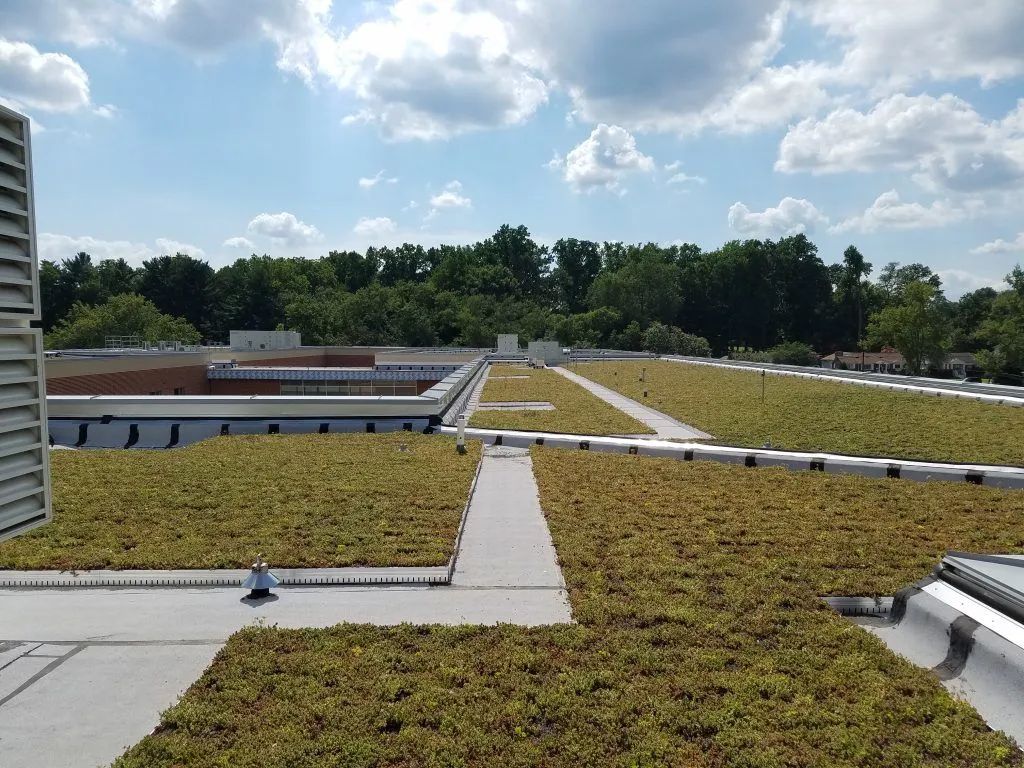
Several buildings in Washington, D.C., have successfully implemented green roofs to meet stormwater regulations. Municipal offices, schools, and commercial properties leverage extensive green roofs to manage runoff while enhancing urban green space. These projects demonstrate measurable reductions in runoff volumes, smoother peak flow rates, and improved stormwater quality, validating green roofs as practical regulatory solutions.
Incentive Programs Driving Adoption
In Maryland, counties like Montgomery and Prince George’s offer stormwater fee reductions for properties incorporating green roofs. These programs reward compliance and encourage sustainable infrastructure adoption, proving that regulatory adherence can also provide financial and reputational benefits. Developers and property owners increasingly view green roofs as a strategic tool for both meeting legal requirements and enhancing property value.
Best Practices for Successful Green Roof Projects
Early Planning and Collaboration
Engaging architects, engineers, and green roof specialists early in the project design phase ensures compliance with both structural and stormwater requirements. Early integration reduces costly redesigns and accelerates permitting approvals, particularly for projects in dense urban areas.
Documentation and Reporting
Accurate documentation of green roof design, installation, and maintenance is essential for regulatory compliance. Municipal authorities may require monitoring data or certification of installed systems. Keeping detailed records demonstrates adherence to stormwater management plans and simplifies future inspections or audits.
Combining Green Roofs with Other BMPs
While green roofs are highly effective, they often achieve optimal results when combined with other BMPs such as permeable pavements, rain gardens, and bioswales. This integrated approach provides redundancy, maximizes runoff reduction, and ensures compliance even during extreme storm events.
Reliable Green Roof Professionals Ensuring Stormwater Compliance
Green roofs are more than just an environmentally conscious choice—they are a strategic solution for meeting stringent stormwater regulations in Washington, D.C., and Maryland. By retaining rainfall, reducing peak flow, improving water quality, and complementing other BMPs, green roofs help property owners achieve regulatory compliance efficiently. Their additional benefits, including energy savings, urban heat mitigation, and aesthetic enhancement, make them a multi-functional investment that aligns with sustainability goals. Proper design, installation, and maintenance are essential to maximize these benefits, ensuring long-term performance and adherence to local stormwater standards.
At Riverbend Greenroofs, we specialize in custom-grown
green roof solutions
tailored for regulatory compliance and environmental impact. Based in Gaithersburg, Maryland, our 35
years of experience have positioned us as a trusted authority in green roof design and installation. From initial consultation to long-term maintenance, our team ensures every project meets both functional and legal requirements. Partnering with Riverbend Greenroofs
provides peace of mind, knowing your property is equipped with a high-performing, code-compliant green roof designed for durability, sustainability, and aesthetic appeal. Whether addressing stormwater management challenges or enhancing urban landscapes, Riverbend Greenroofs
delivers professional expertise, innovative solutions, and results that stand the test of time.
Share this article